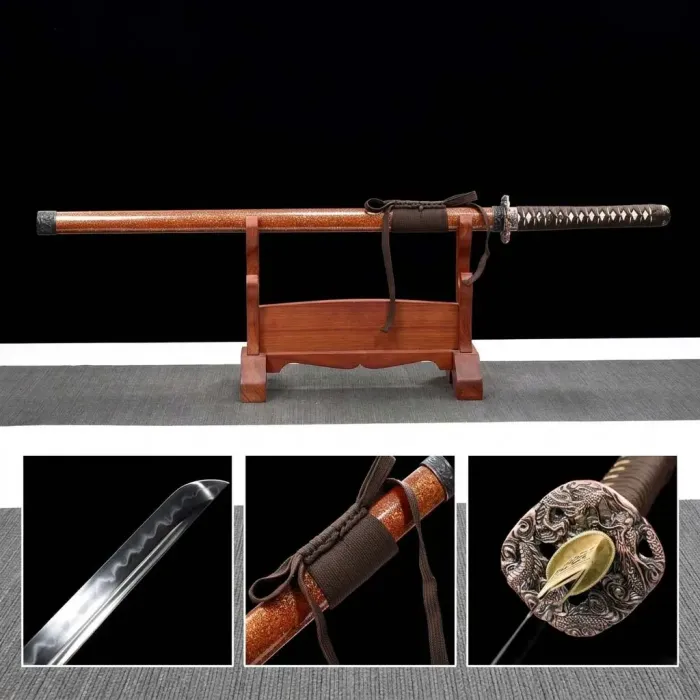
An time-honored nihonto represents a gorgeous masterpiece of skill, but think you need to manifest your distinct manner? Modifying your instrument is a deep journey, allowing you to construct a truly one-of-a-kind piece. From the shaft wrapping and sheath to the handpiece design and heat mark, each feature offers a chance for personalization. This examination delves into the field of katana enhancements, providing facts for both newcomers and proficient enthusiasts desiring to leave their footprint on the classical art of the samurai.
Newcomer's Legitimate Mastery
For those prepared to embark on the enriching journey of martial arts involving swords , 1060 steel katanas furnish an remarkable entry point. This specific grade of tool steel balances a ideal mix between low price and functionality . While less than hard as elite steels, 1060 provides a adequate level of edge development , making it perfect for newcomers to acquire the preliminaries of blade preservation and appreciate the elegance of handcrafted Japanese weaponry. It’s a excellent choice for acquiring experience without the capital burden of more high-grade steels.
Ten Ten Steel Sabers : Harmonizing Functionality and Expense
Providing for devotees seeking an authentic cutlass experience without overwhelming the capital constraint , T10 substance katanas represent a beneficial option. These daggers offer a substantial improvement in endurance compared to budget alternatives, exhibiting acceptable edge retention and suitable flexibility for introductory cutting techniques. While not rivaling the exquisite characteristics of fine steels like T100 or folded substance , T10 provides a commendable blend of utility and cost-effectiveness , making them a common choice for beginners and those on a modest salary .
Surpassing the Steel : Customizing Your Tool's Accessories and Hilt
Even though the polished metallic edge is undeniably the core point of a katana, truly enhancing its magnificence lies in the precise customization of its components and tsuka . This approach allows users to showcase their special flair . Think about the comprehensive possibilities: menuki - decorative charms that introduce visual detail ; the hamon enclosures – often intricately molded ; the tsuka basis itself, wrapped in authentic ito binding ; and the fusa end piece , which can be constructed from various components like valuables or antler .
- Adopt styles that echo with you.
- Test with distinctive elements .
- Concentrate on excellence for a durable statement .
The Charm of the Katana: Heritage, Workmanship, and Metal
That katana retains a incomparable allure, steeped in ages of eastern history and practice . More than merely a tool of conflict , it's a sign of the warrior ethos – a fusion of expertise and command . Its development spanned many generations, with early cutting instruments evolving into the slender curvature and lethal edge we identify today. The manufacture involved is truly spectacular, requiring decades of mentoring to become skilled in . The process involves a sophisticated folding of tamahagane , creating layers that strengthen the weapon’s flexibility and hacking ability. Different schools of forging emerged , each with their unique secrets and procedures for achieving the exceptional steadiness and sharpness - a truly arduous pursuit.
- Primitive Katana models
- The significance of the oriental sword in knight culture
- Conventional processing practices
Identifying the Ideal Steel for Your Katana Project: 1060 vs. T10
Selecting the right steel is remarkably important for any sword project, and the choice between 1060 and T10 can be complex. 1060 is a common American metal, offering a decent balance of strength and resilience, making it relatively easy to heat treat. However, T10, a Asian steel, commonly boasts amplified wear permanence and can probably achieve a enhanced definitive hardness, although it can be markedly troublesome to handle and requires precise heat refinement. Consider your qualification and expected benefits: for a rookie, 1060 may be a simpler starting point, while the master smith might choose the augmented features of T10.
- Convenience of Working
- Longevity
- Decisive Rigidity
Opening the Possibilities: Elite Katana Enhancement Procedures
Refining the technique of katana adjustment extends far beyond basic polishing. Serious connoisseurs are now probing advanced techniques to truly reveal a blade's hidden potential. This demands intricate work with the temper design, utilizing specialized substances for differential processing and carefully picking the geometry of the hilt guard to optimize balance and efficiency. Beyond purely functional adjustments, artisans are increasingly focused on reaching unparalleled aesthetic beauty, through complex decorating and layered polishes that truly transform a katana into a exquisite object.
Forging a 1060 Katana: From Raw Metal to Masterpiece
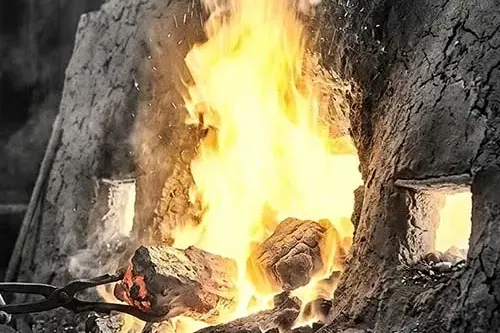
The journey opens with ordinary 1060 compound , a tough material far separated the refined katana it will shift into . Experienced bladesmiths practice a complex process of integrating and forging the unrefined steel, repeatedly glowing it and beating it to separate impurities and produce a homogeneous grain structure. This tedious process, often continuing for spans , builds the vital sturdiness and ductility characteristic of a authentic Japanese cutlery . Further heat procedures , including deliberate hardening and tempering , are imperative to achieve the targeted balance katana sword of sharpness, life and charm .- Overlaying: Reduces impurities and forms grain structure.
- Forming: Fabricates the steel into the initial blade form.
- Tempering: Decides the final hardness and flexibility.
The Enduring Appeal of the Katana: A Deep Dive into Steel and Customization
An venerable katana holds present a intense symbol of Japanese heritage , its fascination far outshining mere artillery . Forged from select steel and usually featuring intricate trims, the process of creation itself is a revered art. Beyond the core craftsmanship, the ability to tailor a katana - from the temper curve to the haft wrapping and clasp - affords for a sincerely individual demonstration for both worshippers and followers alike. This confluence of classical steelwork and boundless personalization creates the katana's continued widespread acceptance across the universe.